
How can we restore joy?
How can we restore joy? Restore hope? I’ve been thinking about this question a lot over the past months. My Dad passed away in August and the thought of the world without him is painful. We are grieving, yet we must move forward and navigate our lives.
This feeling is similar to how I felt when my daughter was diagnosed with her illness when she was a baby. I know this is true of other parents. What follows is also deep pain and grief; for what could have been, for what was expected and for the challenges that lay ahead for them and for us. This pain recurs with every milestone and every challenge, and there are many.
In The Psychology of Hope: You Can Get Here from There, by the late professor Charles R. Snyder, the idea is put forward that hope is not only a wishful emotion but an active strategy with goals, mindset and pathways. Since this publication in 1994, the clinical science of hope and joy have been studied and applied in many settings, including a recent establishment of the Institute for the Study of Hope, Dignity and Wellbeing, an international network of researchers and clinicians.
The realization that I could take an active role in creating my own hope and joy has been very powerful for me. More importantly, we can help others navigate grief and be more supportive by putting mechanisms into place for parents of students with various needs. Joy and hope are not passive but take work, habit and practice.
We are going into a new school year that is filled with challenges and barriers to success for our kids. It always feels like a fight: I have to explain this again? The budget has been cut? My child isn’t eligible for services? Busing?
We must move forward in the midst of our challenges, and I wish for everyone to be able to move forward with joy! After all, we want to live our best lives with our children despite the challenges. Hope theory has a bunch of recommendations, but these resonated with me: Set meaningful goals, anticipate barriers and be involved in community.
The English Montreal School Board (EMSB) and the Advisory Committee on Special Education Services (ACSES) provide tools for students and parents that can help build joy and hope.
ACSES has developed several toolkits that appear on the EMSB website, including one focussed on individual educational plans (IEPs) and how to develop meaningful goals for students and identify potential barriers. The conversation around your child’s IEP is an active and important one for parents and educators. ACSES is also currently developing guides for students and parents going through educational transitions – times that can be very difficult and emotional.
Other initiatives, some from schools, bring parents and students together to be part of community and connection. For example, John Grant High School hosts the Spring into Support Community Night, an annual event that brings together students, families, educators and community resources. I encourage you to attend workshops and events to learn and to meet other families who live similar experiences.
Last, but certainly not least, Inspirations is one of the best resources for those affected with so many different needs.
Restoring joy and hope is an active endeavour! We are not alone in our challenges, and we can navigate them together. If you are not finding the information or support you need, let’s try to create it together.
In this school year, I will be flexing my “hope” muscles, setting my sights on more meaningful goals and working with you all to make sure that you have what you need to do the same.
Wishing everyone a joyous and hopeful school year!
Info: emsb.qc.ca/emsb/community/parents/ tool-kit.
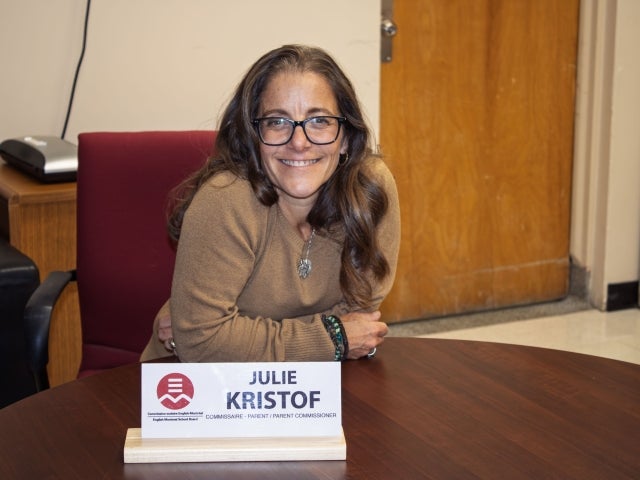
Julie Kristof is vice-chair of ACSES and chairs the governing board at John Grant High School. She is the mother of two.